01
Know your load
Read your bill and identify which appliances run while the sun is producing energy.
Renewable Skills, Brighter You
Learn to power your home with solar, reduce what you buy from the grid, and turn approved exports into bill credits.
Two practical phases combine TESDA-aligned installation competencies and mastering the Philippines net-metering process.
A ₱0 monthly amount due is a goal, not a guarantee. Results depend on energy use, system output, rates, approvals, and bill charges.
See the journey in motion
Meet RSBY and discover how practical learning connects home installation, responsible decision-making, and the goal of lower electricity bills.
The zero-bill formula
Phase 1 reduces electricity purchased from the grid. Phase 2 helps eligible excess solar earn credits through an approved net-metering connection.
Read your bill and identify which appliances run while the sun is producing energy.
Use a correctly assessed and appropriately sized solar system to cover daytime demand.
After approval, energy your home does not use can flow through a bidirectional meter.
Eligible export credits reduce the bill and may roll forward to future billing periods.
What zero can look like
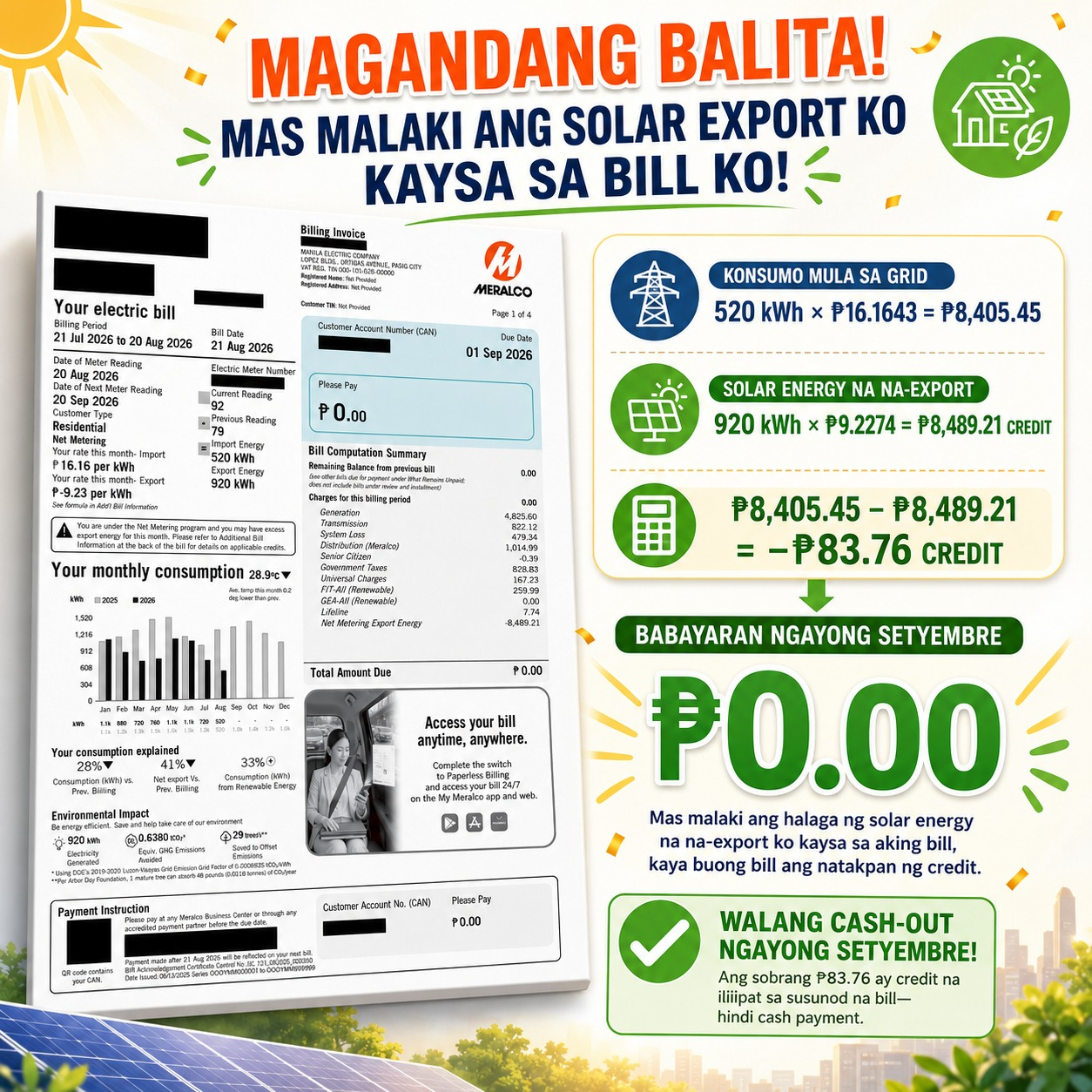
In this teaching example, the value of approved solar exports is greater than the eligible grid charges for the billing period. The amount due becomes ₱0.00 and the remaining credit can move forward.
₱83.77 carries forward as bill credit. It is not a cash payment.
Actual production, consumption, rates, eligible charges, approvals, and credits vary.
Use solar where it is generated
Begin with the competencies that make a residential PV system safer, more understandable, and more useful: assessment, component compliance, installation, testing, commissioning, and documentation.
 01
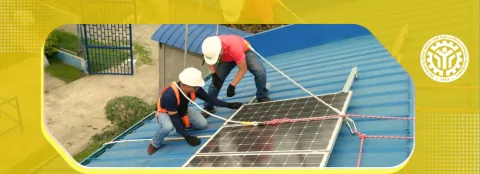
01Understand electricity, PV system types, tools, documentation, and essential safety practices.
 02
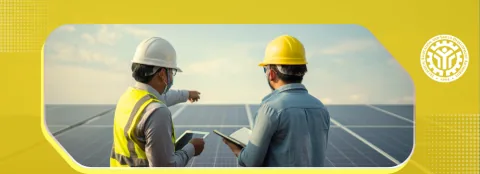
02Study the roof, shade, available space, daytime loads, and the conditions that shape a suitable system.
 03
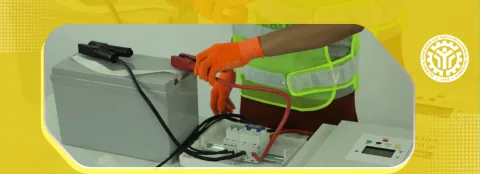
03Match panels, inverter, protection, wiring, mounting, and optional storage to the installation plan.
 04
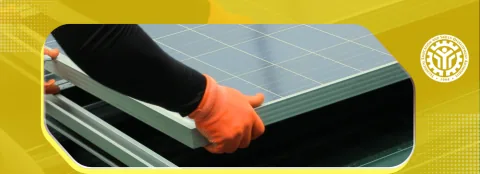
04Follow a disciplined workflow for mounting, equipment placement, wiring, protection, and documentation.
 05
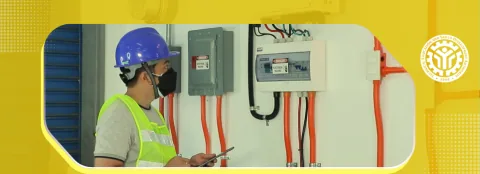
05Verify safety and performance, record results, monitor production, and plan responsible maintenance.
Phase 1 milestone
Turn excess solar into bill credits
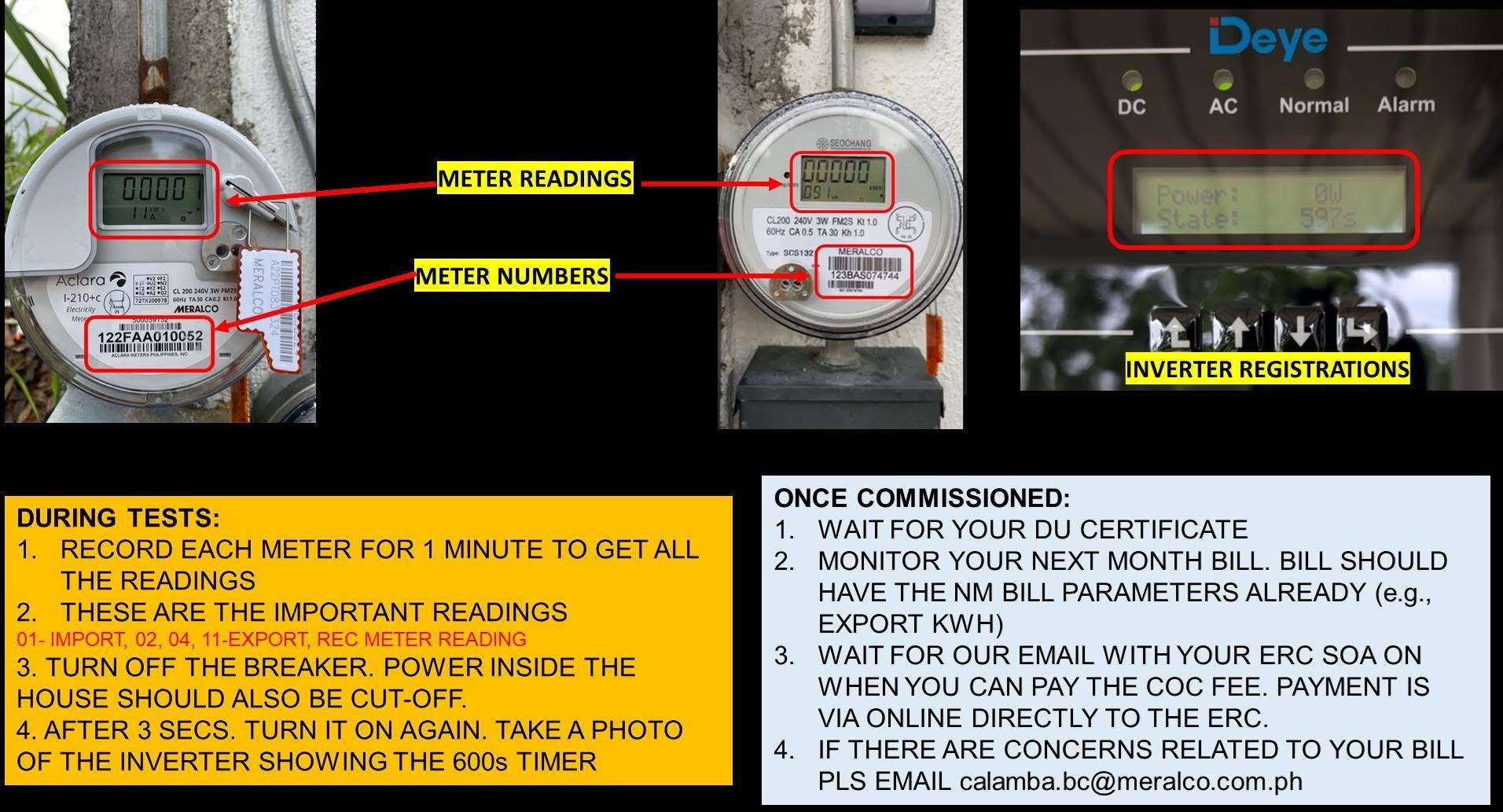
Net metering adds a regulated connection and billing process to your solar journey. Learn the requirements, coordinate qualified work, and understand what the bidirectional meter records.
Compare your household demand, solar production, self-consumption, and likely excess generation.
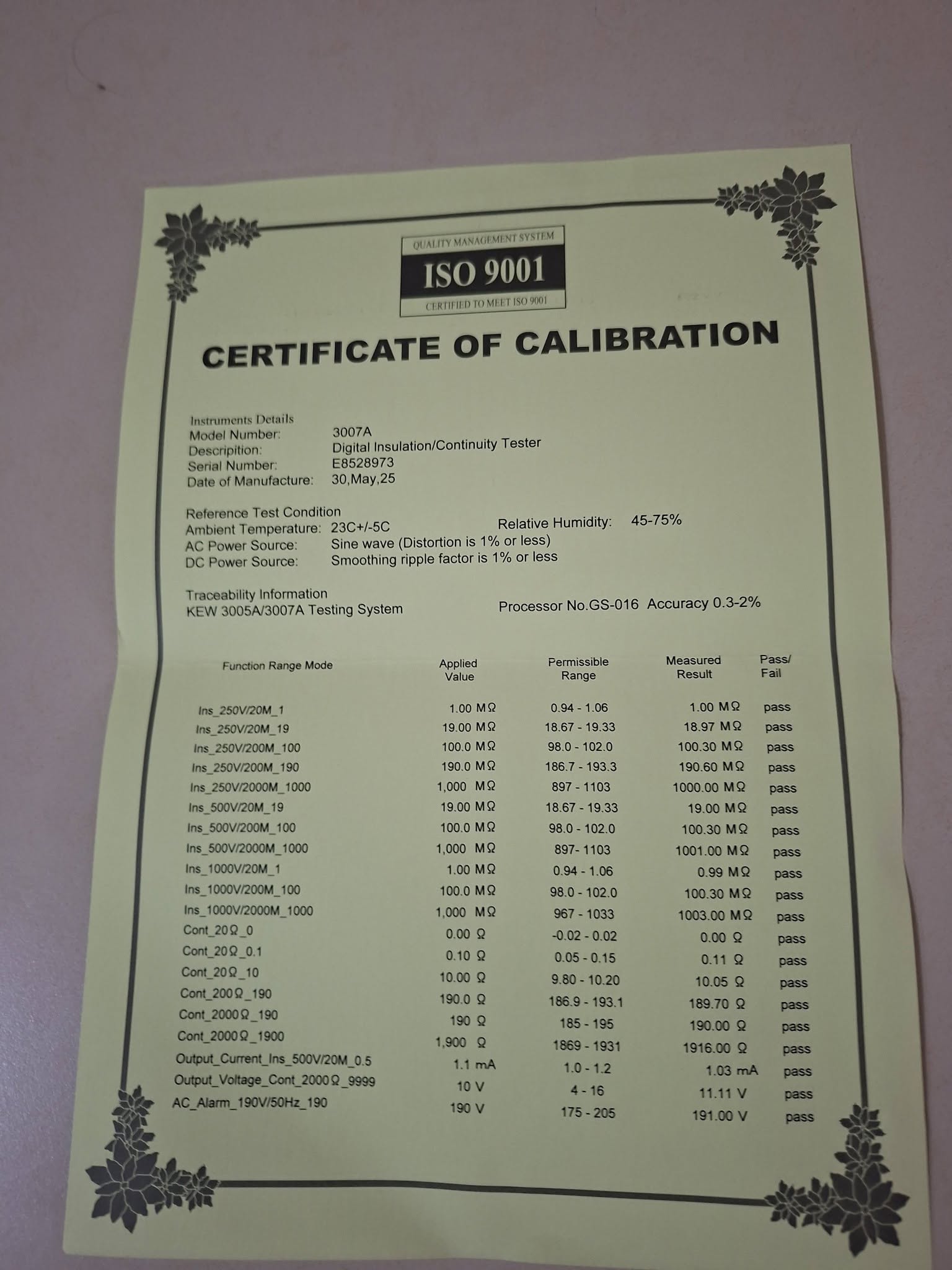
Organize the diagrams, equipment records, permits, certificates, and utility documents required for review.
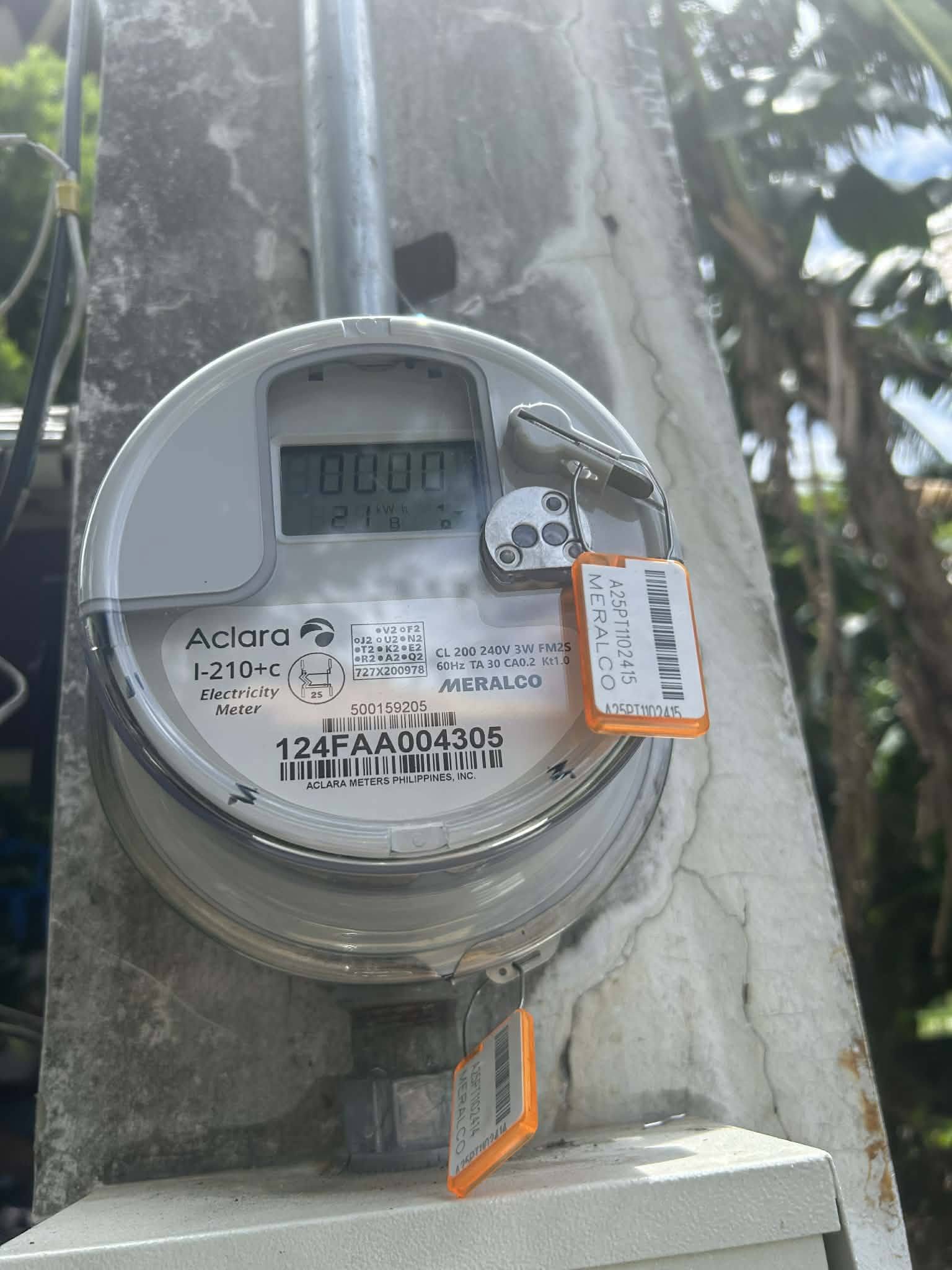
Coordinate inspection, approval, and bidirectional metering with the relevant distribution utility.
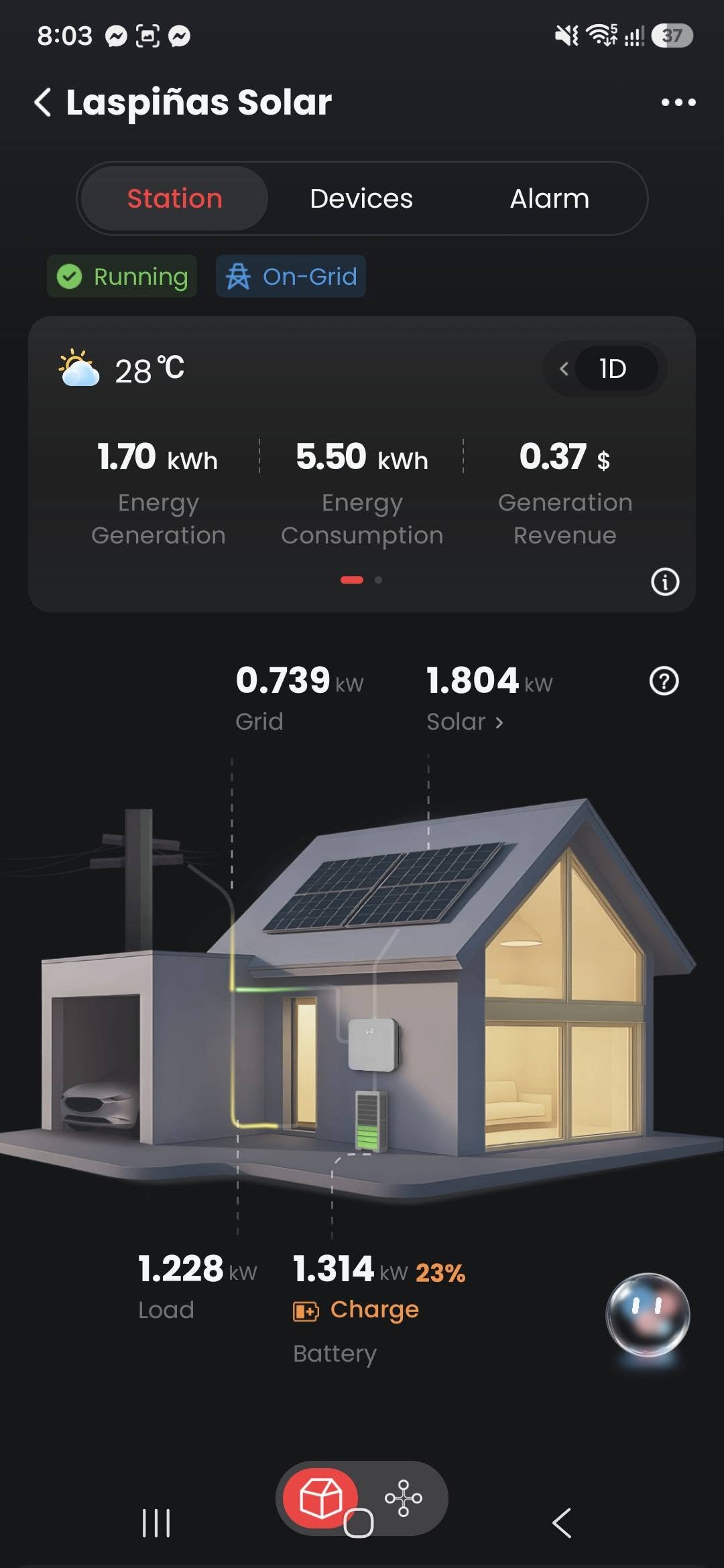
Read each bill, track credits, shift suitable loads to daylight, and maintain system performance.
RSBY organizes Phase 1 around the practical progression found in Photovoltaic Systems Installation NC II: assess, check, install, test, commission, and document.
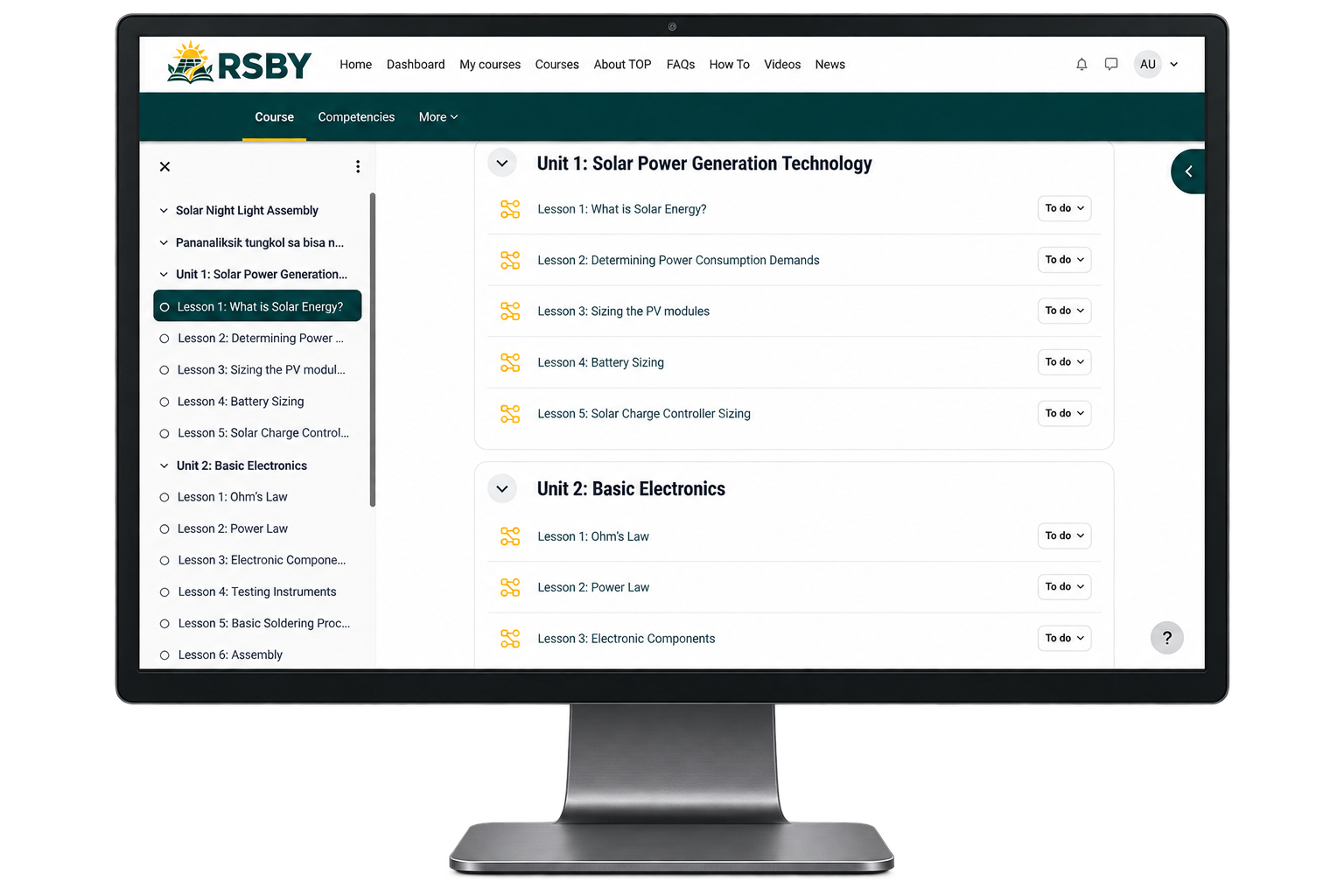
Skills that keep working
The Zero-Bill Journey gives you a practical foundation you can apply to your household, a solar career, or a responsible service business.
DIY learning. Qualified supervision.
Solar work can involve live electrical systems, roofs, structural loads, batteries, permits, and utility rules. Apply hands-on skills within your training and authorization.
Your Zero-Bill Journey starts here
Begin with safe home solar fundamentals, progress toward approved net metering, and keep improving with every bill you understand.